FTIR Spectro, India's top analytical lab instrument supplier and exporter, specializes in providing affordable yet customizable lab solutions with unrivaled precision at an unbeatably affordable price. We also provide 24/7 global support from our expert team of technicians that ensure our equipment remains cutting edge for industry and research applications - equipping laboratories with cutting edge technology and outstanding services.
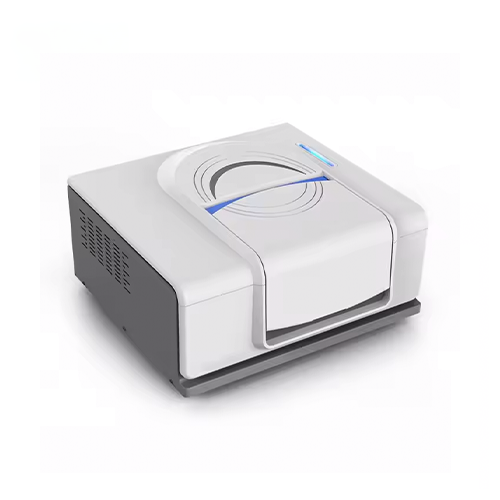
FTIR Spectrophotometer Manufacturers India
FTIR Spectro is a leading FTIR Spectrophotometer manufacturer, supplier and exporter In India. We manufacture cutting-edge FTIR spectrophotometer commitment to quality, reliability, and technological advancement of laboratories, research institutions, and industries across the globe.
Trusted FTIR Spectrophotometer Supplier & Exporter
As a leading FTIR Spectrophotometer supplier and exporter from India, we offer products at affordable prices, products that meet International quality standards. Shipping available world-wide, customer support. We process orders very fast and deliver in a timely manner.
Get Quote for Analytical Instruments
Request a quote or product catalogue for FTIR spectrophorometer, we offer high-quality analysis instruments at affordable prices, 24/7 customer support, on time shipping delivery world-wide
Advanced FTIR Spectrometer for Molecular Profiling
We supplies a line of Fourier Transform Infrared spectrometers crafted for swift, non-invasive chemical profiling. Whether stationed in a processing plant or a university basement, the units afford researchers superior resolution, a wide operational band, and intelligent post-acquisition algorithms.
What Makes FTIR Spectroscopy Unique?
These instruments quantify the selective absorption of mid-infrared energy by sample molecules, a phenomenon inherently linked to their bond vibrations. The resulting spectrum serves as a comparative molecular fingerprint, enabling quick identification. Fields as diverse as pharmaceuticals quality control, forensic science, polymer development, and environmental monitoring now rely on this level of evidential detail.
Specifications That Matter
Coverage spans 7800 to 350 cm ¹, with an optional extension reaching out to 15 000 cm ¹ for rarer spectral targets. A continuous, sealed interferometer cage blocks moisture and particulate ingress, supporting uninterrupted service in dusty labs. Spectral resolution approaches 0 4 cm ¹, yielding clear sub-band features essential for structural assignment.
FTIR Spectrophotometre Technical Specifications
- Spectral Range: 7800-350 cm-1, with extension capability for longer wavelengths. Absolute uncertainty can reach 0.4 cm-1 under most operating conditions.
- Standard detector is a DLATGS unit; MCT array is optional when additional sensitivity is required. Beam splitter consists of a Germanium-coated KBr element to balance throughput and spectral fidelity.
- A long-lived ceramic infrared source minimizes maintenance and lamp drift. The interferometer uses a Michelson design with a corner-cube mirror for compact alignment stability.
- Software bundle supports both routine and quantitative workflows, including baseline correction and spectral smoothing. Connectivity is versatile-USB, LAN, and ports for external devices like balances or automated samplers.
Why Select Us as Your FTIR Spectrophotometer Supplier?
- Our manufacturing operations comply with ISO 9001 and display the CE mark, ensuring processes meet global benchmarks for quality and safety.
- In-house research and development teams work constantly to refine optical benches and detector design, translating academic insight into commercial hardware.
- Installation and calibration technicians travel worldwide, ready to confirm instrument accuracy at customer sites and provide follow-on support.
- Economies of scale allow us to quote competitive prices while delivering components that laboratory managers classify as premium grade.
- Prospective buyers may request a pre-sales demonstration in their own facility or engage technical specialists for consultation via video link.
- After purchase, service engineers can conduct on-site training, and telephone help-desk staff remain available around the clock.
Serving Global Industries
- Universities and research institutes access our equipment for advanced spectroscopy coursework and synthetic-characterization projects.
- Environmental agencies use the analyzers to profile air, soil, and water matrices, ensuring compliance with regulatory thresholds.
- Food-and-beverage testing laboratories apply FTIR to authenticate ingredients and monitor process hygiene in near real time.
- Petrochemical and polymer firms rely on the instruments for rapid quality-control checks during batch production.
- Pharmaceutical manufacturers incorporate the systems in raw-material release and finished-product assays, where precision is non-negotiable.
Request a Quote Today
Reach out to explore how our FTIR spectrophotometers can enhance your analytical throughput while satisfying applicable international standards.Leading analytical lab equipment manufacturer, supplier and exporter in India
📧 Email: contact@ftirspectro.com | 📞 Call: +91-9996186555 | 🌐 Website: www.ftirspectro.com
Current market data indicate that an FTIR spectrophotometer in India ranges from approximately ₹3,00,000 at the entry level to ₹15,00,000 for high-spec, name-brand models.
Nearly all major Indian manufacturers provide international shipping; shipments are carefully packaged and accompanied by the required customs documentation.
FTIR is versatile enough to analyze solids, liquids, and gases, though proper sample compartments or miniaturized cells may be needed for non-solid forms.
Routine calibration every three months is a common best practice, although extremely high-throughput labs may shorten that interval.
Proprietary software that runs on Windows typically governs the instrument; packages include spectral analysis, automated library matching, and tools for generating compliance-grade reports.
FTIR spectroscopy can be applied in various fields, including:
Analysis: Identification and quantification of organic and inorganic compounds.
Pharmaceuticals: Quality assurance/verification for raw materials/finished products.
Environmental Science: Monitoring air and water quality.
Materials Science: Analyzing polymers, coatings, and composites.
Research in biological science typically involves studying proteins, lipids and other biomolecules.
Regular maintenance includes:
Cleaning: Keep the sample compartment and optics clean.
Calibration: Periodically calibrate the instrument using a known standard.
Software updates: Ensure the software is up-to-date for optimal performance.
Storage: Store the instrument in a clean, dry environment.

Get In Touch

Industrial Growth Centre, HSIIDC, SAHA Haryana, India


Copyright © 2024 ftirspectro.com. All rights reserved.